

Pope Leo XIV: final histology finds localized tumour, no further therapy needed
According to doctors Carbone and Margaritora, the lung adenocarcinoma removed on 13 October was localized and no further therapy is necessary. From the first check-ups to the Gemelli, a timeline of events, and why the South America trip looks increasingly likely
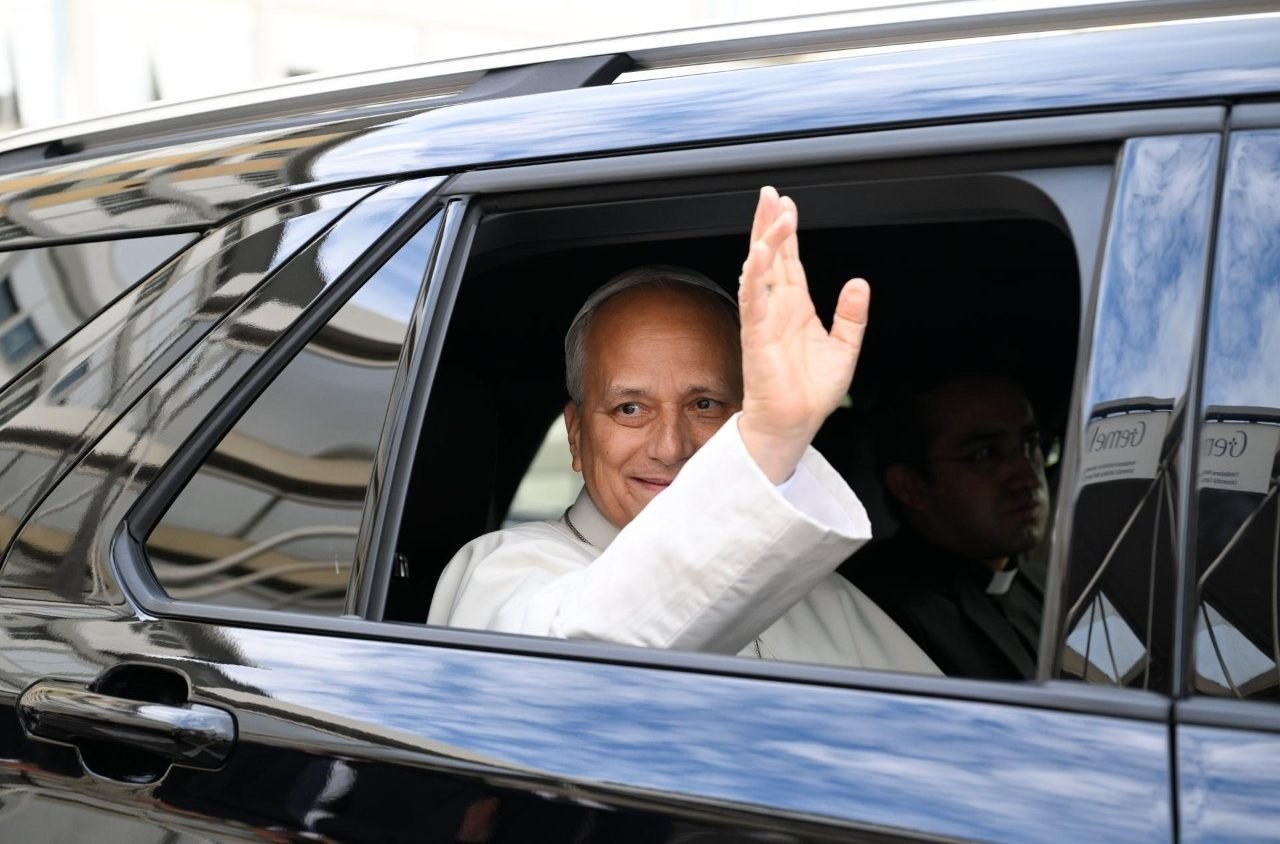
The final histological results came on the evening of 21 October, eight days after surgery. In a communication to journalists issued by the Holy See Press Office, Dr Luigi Carbone and Prof. Stefano Margaritora wrote: "The final histopathology and molecular testing reports on the tissue removed during the Holy Father’s surgery were issued today. The results confirmed that the tumor was a lung adenocarcinoma and that the disease was localized. A subsequent oncological assessment has confirmed that no further treatment is necessary", according to the official English text published by Vatican News (Press Office note).
This was the news awaited since the day of the operation: the diagnosis of adenocarcinoma had been known since 13 October, but the final tests, on which any further treatment depended, were still outstanding.
Timeline.
11 October. The Pope himself announced it at the Angelus: "during some recent medical examinations, the doctors found a small, localized nodule in my lung. It was detected at a very early stage and is well-localized. The doctors believe that it is best to intervene, so, following their advice, I have decided to undergo surgery to remove it" (Angelus text). That evening spokesman Matteo Bruni said the operation would take place early the following week.
12 October. The Press Office said the nodule had emerged during routine check-ups; Bruni announced that the Pope would be admitted to the Gemelli Hospital the next day, "in the late morning" (our translation). The Prefecture of the Papal Household cancelled all audiences until 20 October (B0807).
13 October. The Pope was admitted to the Gemelli and operated on in the afternoon by the thoracic surgery team led by Prof. Margaritora (13 October note). In the evening a statement signed by Carbone and Margaritora said: "To make the operation radical, the lower lobe of the right lung was removed using a video-assisted technique. The intraoperative histological examination confirmed the diagnosis of a pulmonary adenocarcinoma, as suspected from the pre-operative tests" (our translation). The operation lasted about 90 minutes, "was successful and there were no complications" (our translation) (B0809).
14-16 October. The doctors' daily updates described a regular recovery: normal blood tests and X-rays, respiratory physiotherapy, the first steps in his room, then "the good recovery of the operated lung" and "the steady improvement of his general condition" (our translation) (14, 15, 16 October).
17 October. The Pope was "judged fit for discharge" (our translation) (doctors' note) and returned to the Vatican in the afternoon. The same day Margaritora told Vatican News the operation had been "a routine operation" and that about ten more days were needed for a full recovery (our translation) (interview).
18 October. From the window of the Apostolic Palace, at his first Angelus since the hospital stay: "Now that I have overcome this delicate phase, as you know, I will gradually resume my activities, always with God's help and your prayers" (Angelus text).
21 October. In a rain-soaked St Peter's Square, his first General Audience since surgery: "The first thing I would like to say is thank you! Thank you for the support of your prayers" (catechesis). In the evening came the note on the final histology.
An "absolutely chance" discovery. In his interview with Vatican News on 17 October, Margaritora explained how the tumour was found: "The discovery of the Pope's malignant lung tumour was absolutely by chance, as unfortunately often happens, because during routine abdominal tests this small spot was found in the chest, at the base of the lungs" (our translation). On 11 October the Pope himself had spoken of a nodule detected "at a very early stage" and "well-localized". Today's note completes the picture: the disease "was localized" and the oncological evaluation rules out further therapy.
The value of early diagnosis is well known in medicine: when a disease is found early and remains confined, the chances of treating it decisively are generally better. In the Pope's case it is his doctors who describe this path: a chance finding during routine tests, a radical operation, no further therapy. No other clinical data have been released, and the schedule of future check-ups has not been announced.
The South America trip. The apostolic journey to Uruguay, Argentina and Peru is scheduled for 6-17 November, but since the surgery the Holy See has not officially confirmed it. On 17 October Margaritora said "there are no clinical reasons why this trip should not take place" (our translation), a medical assessment rather than a decision by the Holy See. Today in Lima the Apostolic Nuncio to Peru, Paolo Rocco Gualtieri, told EWTN News: "This morning the Holy Father held the general audience and we saw him recovered. The trip is confirmed. We await him with great joy" (our translation) (EWTN News). According to local sources, the legs would be Uruguay from 6 to 8 November, Argentina from 8 to 11 and Peru from 11 to 16, with Mass at the Las Palmas air base in Lima on 16 November. Peru's government expects a new Vatican advance team on 26 October. Today's news makes the trip more likely, but the final word rests with the Holy See.
What we don't know. The note does not give a schedule for further check-ups or say whether the trip programme will change; the Holy See has not issued an official announcement on the trip since the surgery.
#LeoXIV #Vatican
Source: Sala Stampa della Santa Sede