

Halloween: exorcists warn about the occult as the Church points to the prayer to St. Michael
The International Association of Exorcists' note, the Catechism, the words of Francis, John Paul II and Benedict XVI, and the text of Leo XIII's prayer
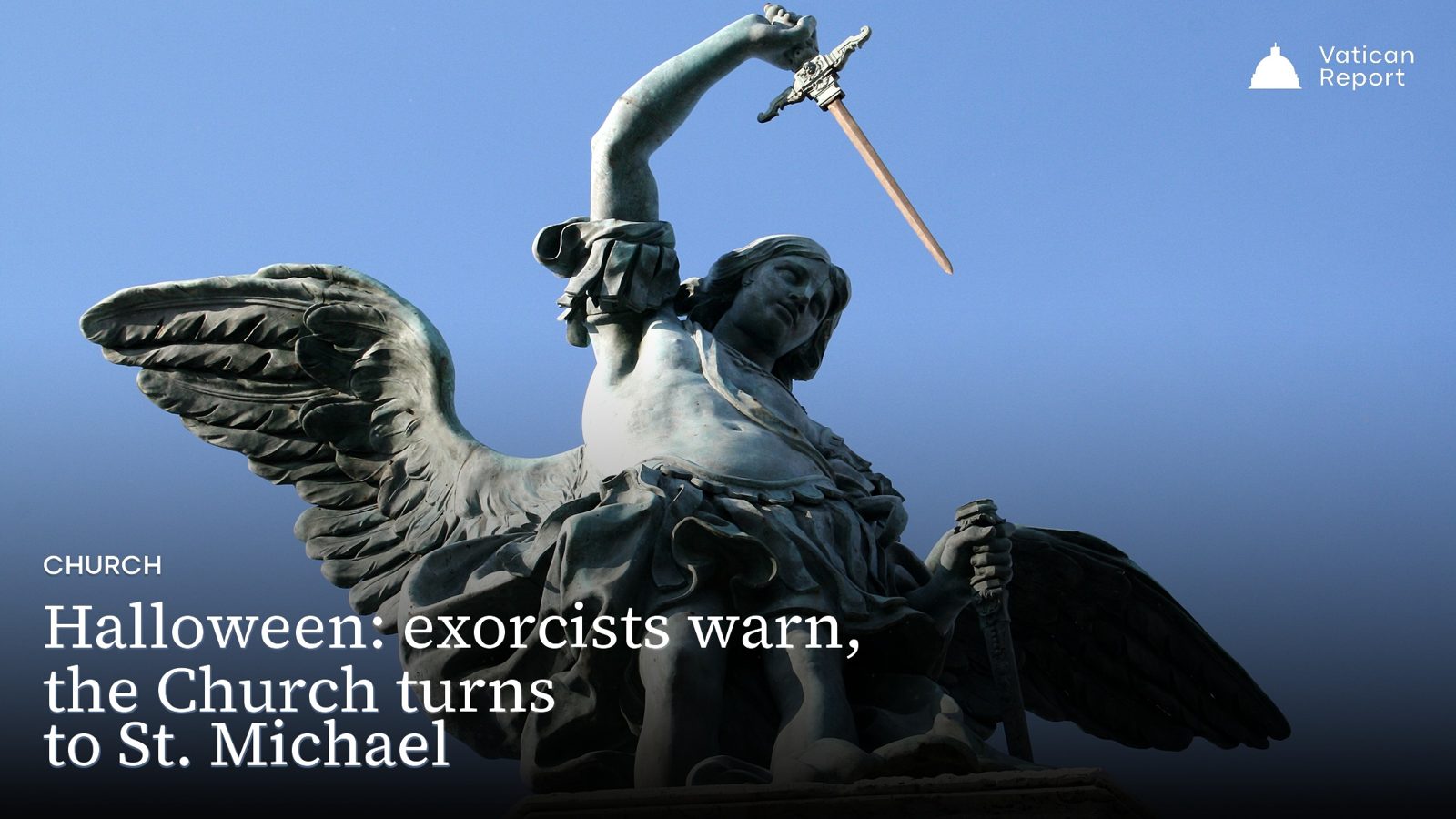
On the eve of October 31, the Church is again speaking about Halloween. It does so through a note from the International Association of Exorcists (AIE) and, more deeply, through Popes' words on spiritual combat and an old prayer: the prayer to St. Michael the Archangel, written by Leo XIII. No Pope has devoted a document to Halloween; the line that emerges from the sources is a different one: vigilance, not fear.
Exorcists: "Who are the real obscurantists?"
In a note released on October 27 and reported by the Italian bishops' news agency SIR, the AIE criticizes occult fairs and festivals, some promoted by local councils, and denounces a "public revival of magical and occult practices." Presenting the occult "simply as a cultural fact or a recreational event," the exorcists write, does not justify it: "rather, it requires knowing it in order to avoid conduct or attitudes considered spiritually harmful to personal and social growth" (our translation).
Back in 2016, speaking to Vatican Radio, Aldo Buonaiuto of the anti-cult service of the Pope John XXIII Community recalled that October 31 is the eve of All Saints and warned against two extremes: "It is dangerous to insist on seeing the devil everywhere, but the opposite extreme, trivializing, is just as dangerous" (our translation).
What the Catechism says
The Catechism of the Catholic Church is clear: "All forms of divination are to be rejected: recourse to Satan or demons, conjuring up the dead or other practices falsely supposed to 'unveil' the future" (no. 2116). It adds that practices of magic or sorcery "are gravely contrary to the virtue of religion" (no. 2117).
The words of the Popes
In the apostolic exhortation "Gaudete et Exsultate" (March 19, 2018), Pope Francis devoted a section titled "More than a myth" to the subject: "Hence, we should not think of the devil as a myth, a representation, a symbol, a figure of speech or an idea. This mistake would lead us to let down our guard, to grow careless and end up more vulnerable" (no. 161). On September 29, 2018, the Holy See Press Office announced his invitation to pray the Rosary every day in October, ending with the "Sub tuum praesidium" and the prayer to St. Michael, asking for protection of the Church "from the devil, who always seeks to separate us from God and from each other."
At the Regina Caeli on April 24, 1994, John Paul II recalled that Leo XIII had introduced "a special prayer to St. Michael throughout the Church" and added: "Even if today this prayer is no longer recited at the end of the Eucharistic celebration, I invite everyone not to forget it, but to recite it to obtain help in the battle against the forces of darkness and against the spirit of this world" (our translation).
At the All Saints' Angelus in 2006, Benedict XVI pointed instead to the meaning of the feast that follows the night of the 31st: all Christians, called to holiness, are men and women who "have their feet on the ground, but their hearts already in Heaven" (our translation).
Leo XIV has not spoken about Halloween. On October 3 he celebrated Mass for the Vatican Gendarmerie, whose patron is St. Michael the Archangel; according to Vatican News, he entrusted all its personnel to the saint, saying: "May your finest badge be a heart that knows how to protect" (our translation). At the Angelus on November 1, 2025, he described the communion of saints as "a great celebration in which we rejoice together in the love of God."
The prayer to St. Michael the Archangel
Leo XIII introduced it in 1886 among the prayers to be said after Low Mass; the obligation ended in 1964. This is the English text published by the Holy See Press Office in 2018:
"Saint Michael Archangel, defend us in battle, be our protection against the wickedness and snares of the devil; may God rebuke him, we humbly pray; and do thou, O Prince of the heavenly host, by the power of God, cast into hell Satan and all the evil spirits who prowl through the world seeking the ruin of souls. Amen."
From the eve to All Saints
"Halloween" comes from "All Hallows' Eve," the eve of All Saints. On November 1 the Church celebrates the solemnity of All Saints, and on November 2 it commemorates all the faithful departed. Many parishes offer vigils and saints' parties for children and families as a Christian alternative to the night of the 31st.
Sources: International Association of Exorcists via SIR (10/27/2026); Vatican Radio (10/29/2016); Catechism of the Catholic Church nos. 2116-2117; Gaudete et Exsultate no. 161; Holy See Press Office (9/29/2018); Regina Caeli 4/24/1994; Angelus 11/1/2006; Vatican News (10/3/2026); Angelus 11/1/2025.
Source: SIR