

"Venite ad me": the Doctrine of the Faith document in five points
Restart from the kerygma, evangelize adults, reckon with the digital world: the Considerations on handing on the faith approved by Pope Leo XIV
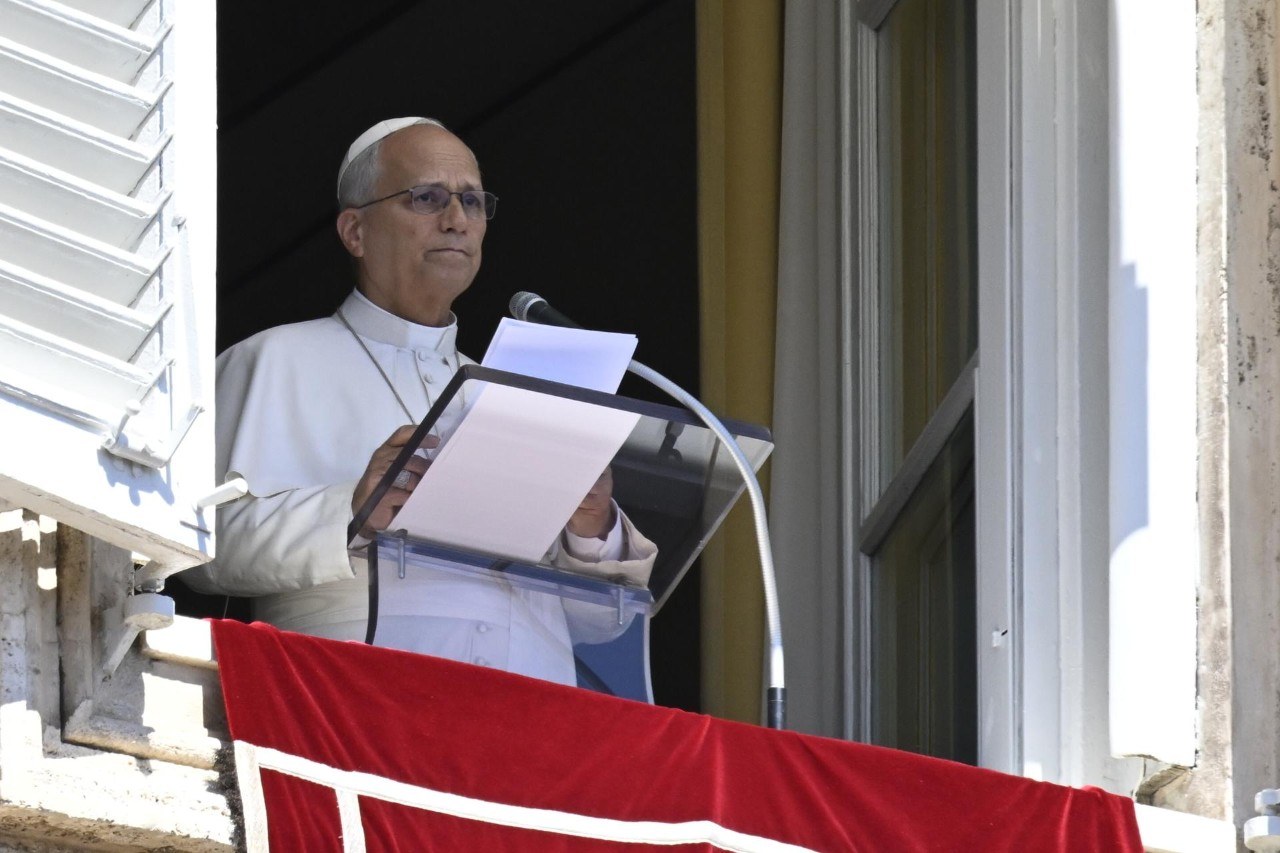
The Dicastery for the Doctrine of the Faith today, Thursday 22 October, published "Venite ad me. Considerations on the Transmission of the Faith in the Change of Era" (Bulletin B0828). The title takes up the words of Jesus in the Gospel of Matthew: "Come to me, all you who labor and are heavily laden, and I will give you rest" (Mt 11:28).
The starting point is an observation: in many parts of the world, faith is no longer handed on from one generation to the next as it once was. The text, 144 paragraphs in eight chapters plus an introduction and a conclusion, immediately clarifies its genre: it is a set of "Considerations", not a "Doctrinal Note". Its purpose is "to stimulate ecclesial reflection and pastoral commitment regarding the transmission of the faith", without "claiming to settle the matter" (par. 8).
1. Back to the kerygma. The document presents itself as taking up an invitation Pope Leo XIV addressed to the Italian bishops in June 2025: "In a time of great fragmentation, it is necessary to return to the foundation of our faith, to the kerygma" (par. 4). The first proclamation is summed up as: "Jesus Christ, who is alive, loves you and gave his life to save you" (par. 76). It must not be "a mere transmission of content", but a "'performative' proclamation, capable of truly touching the hearts of those who receive it" (par. 77).
2. The family is no longer enough: evangelizing adults. Although it retains its importance in certain regions of Africa and Asia, the transmission of the faith within the family "has been interrupted in many parts of the world", and handing it on to new generations "no longer occurs, so to speak, 'automatically'" (par. 38). The conclusion is clear: what is needed is "the evangelization of adults and a move beyond pastoral ministry focused solely on the catechesis of children and adolescents" (par. 42). The text also notes that many children and adolescents drift away from the Church right after Christian initiation, a sign that catechesis "still struggles to find the most appropriate ways" to foster a lasting encounter with Christ (par. 79).
3. The "sovereignty of the self" and "do-it-yourself" faith. The Dicastery describes an "unprecedented culture" that exalts the "'sovereignty of the self'" and feeds an increasingly pronounced individualism (par. 56). On digital technology and artificial intelligence its judgement is two-sided: new technologies "open unprecedented possibilities for evangelization", but the invitation to faith "risks becoming disembodied" and can lead people to build a "'do-it-yourself' faith, shaped by their own tastes and preferences rather than by the teaching of the Church" (par. 60). The analysis covers Europe, North America, Latin America, Asia and Africa (pars. 47-52).
4. Signs of hope, without triumphalism. The document points to a growing number of conversions and returns to the Church in the most secularized areas. It cites France: according to a survey for the French Bishops' Conference, the number of adults baptized in 2026 rose by 28% over the previous year and is more than three times the 2016 figure; the vast majority are under 40 (par. 63). But it urges caution: many neophytes, shortly after baptism, "return to a state of practical indifference", and "triumphalistic attitudes" should be avoided (par. 64).
5. Language, witness and some "areas of attention". To be effective, handing on the faith "must take the form of an engaging interpersonal relationship"; in the words of Pope Francis' Exhortation Christus Vivit, "we need to use above all the language of closeness" (par. 81). Chapter VII lists specific concerns: popular piety, the homily, volunteering, large events, Catholic schools and universities, and ecumenical commitment. Among them is the need "to allow women access to those forums where important decisions regarding the life of the community are made": the Dicastery says it has studied the topic and submitted its conclusions to the Pope through the Secretariat of the Synod (par. 116). The text also calls for "a specific investigation into the sudden decline of Catholicism in countries where it was deeply rooted" (par. 119).
Who signed it and the Pope's approval. The document is signed by Víctor Manuel Fernández, Prefect of the Dicastery for the Doctrine of the Faith, and Armando Matteo, Secretary for the Doctrinal Section. Pope Leo XIV approved it during the audience of 21 August 2026, memorial of Pope Pius X, and ordered its publication. It had been adopted at the Dicastery's Ordinary Session on 24 June 2026. It bears today's date, 22 October, memorial of Saint John Paul II.
The context. As the conclusion explains, the task was entrusted to the Dicastery by Pope Francis "toward the end of his life", and Pope Leo XIV "subsequently reiterated this request" (par. 138). The text repeatedly quotes Pope Leo XIV's first encyclical, Magnifica Humanitas, and lists the coming Jubilee of the Redemption in 2033 among the reasons to speed up the drafting (par. 3). Many bishops' conferences contributed (par. 6); according to a Dicastery source quoted by ACI Prensa, about 70% of those consulted responded. The final chapter gathers testimonies, sent by bishops, of people who discovered or rediscovered the faith: from Colombia to Japan, from Slovakia to Angola.
Our flash from today:
vaticanreport.com/flash/be5b7e5b-37fc-45f9-a8af-ca5c366d5582?lang=en
Sources: Bulletin B0828 · Full text of "Venite ad me" (vatican.va) · Vatican News · ACI Prensa / EWTN News
#LeoXIV #Vatican
Source: Sala Stampa della Santa Sede