

"Do not be afraid": 48 years since the election of John Paul II
From the Loggia on 16 October 1978 to the tenth floor of the Gemelli. Tonight Polish faithful pray in St Peter's Square for Leo XIV
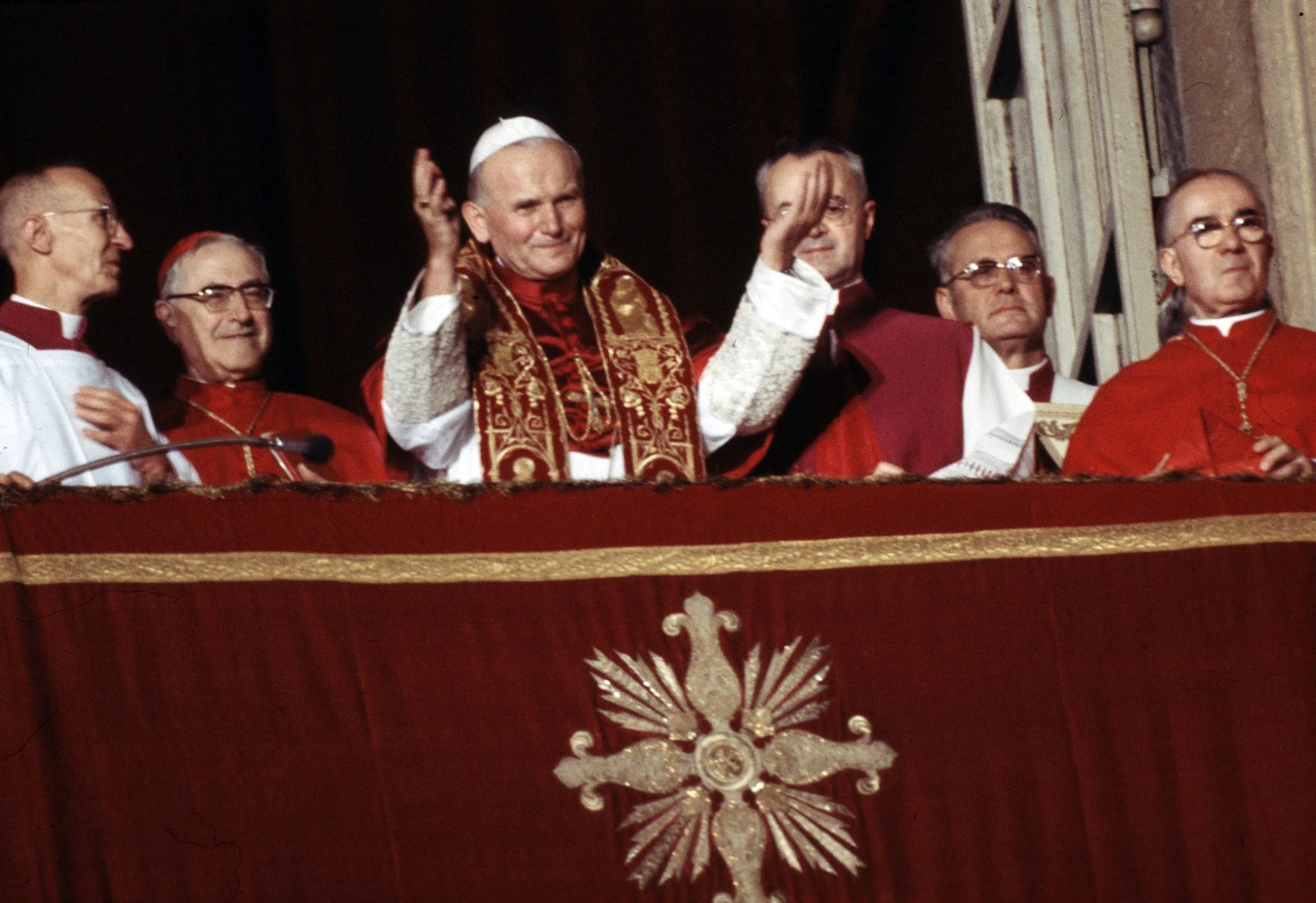
It was 16 October 1978, shortly after 5.15 pm, when the College of Cardinals elected the Archbishop of Kraków, Karol Wojtyła. Forty-eight years have passed.
The facts. From the Loggia of the Blessings the new Pope introduced himself in Italian: "They have called him from a distant country... distant, but always so close through communion in the Christian faith and tradition. I was afraid to receive this nomination, but I did it in the spirit of obedience to Our Lord Jesus Christ and in total confidence in his Mother". And then, with a smile that entered Rome's memory: "I do not know whether I can express myself well in your... our Italian language. If I make a mistake, you will correct me" (official Italian text; our translation).
Six days later, on 22 October, at the inauguration of his Petrine ministry in St Peter's Square: "Do not be afraid. Open wide the doors for Christ". And again: "Do not be afraid. Christ knows 'what is in man'. He alone knows it" (homily).
It was a pontificate of almost twenty-seven years, ending on 2 April 2005. Benedict XVI beatified him on 1 May 2011; Pope Francis canonized him on 27 April 2014.
The Gemelli, the tenth floor. The bond between the Popes and the Gemelli hospital began on 13 May 1981, when John Paul II underwent emergency surgery there after the assassination attempt in St Peter's Square. He returned several times over the years, the last in February and March 2005. It was he who called the tenth-floor apartment "Vatican Three", after the Apostolic Palace and Castel Gandolfo. It is the same floor where Leo XIV is now convalescing after his operation.
Tonight in the Square. At 7 pm, as reported by L'Osservatore Romano, Polish faithful gather in St Peter's Square for a vigil on the anniversary of Saint John Paul II's election, praying the Rosary for the health of Pope Leo XIV.
A reflection. Forty-eight years on, the words of that evening and of that October Sunday carry a particular weight. One Pope knew suffering in his body and lived it before the world; another now looks out over Rome from the same window. The prayer of his fellow countrymen, in the square where it all began, joins the two memories: the remembrance of one who asked us not to be afraid, and the entrustment of one who today waits to return.