

Amoris laetitia, ten years on: the question of Communion for the divorced and remarried
The head of the German bishops reports a “controversial” discussion at the meeting convened by Pope Leo XIV. What the text says, the dubia, the different implementations
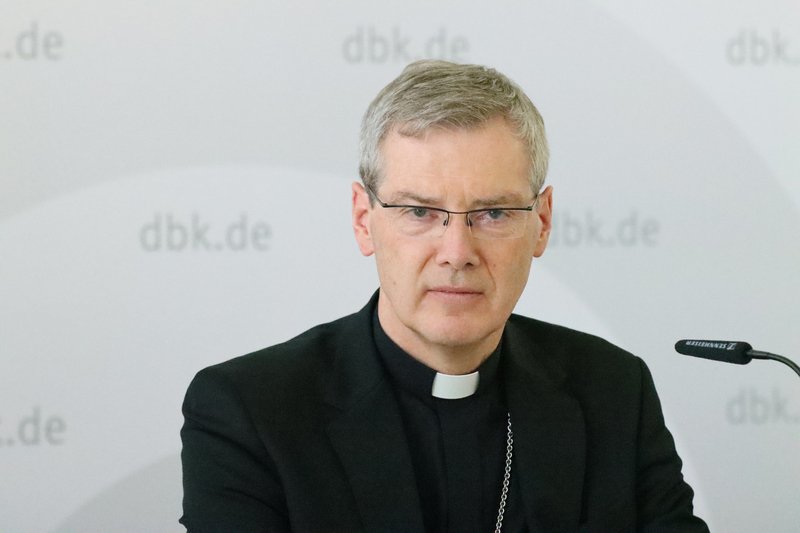
Ten years on, the most debated question in Amoris laetitia is back on the table. At the close of the meeting convened by Pope Leo XIV with the presidents of bishops' conferences, the head of the German bishops reports a “controversial” discussion of Communion for the divorced and remarried. Here are the facts, the context and our reading.
The statement. Heiner Wilmer, Bishop of Münster and chairman of the German Bishops' Conference (DBK), said the question of divorced and remarried Catholics and their admission to Communion was “discussed controversially.” “Differing views on the relationship between canon law and the pastoral perspectives of Amoris laetitia became apparent,” he said, adding that the question remains “a challenge” (our translation from German; katholisch.de; CNA Deutsch). Wilmer also pointed to violence within families, including femicide, as “a shocking reality” that must not be ignored.
The meeting. From 7 to 14 October, in the Paul VI Hall, Pope Leo XIV gathered the presidents of bishops' conferences and the heads of the Eastern Catholic Churches for the meeting “Ten years after Amoris laetitia: Proclaiming the Gospel with families today,” organised by the Dicastery for Laity, Family and Life and the General Secretariat of the Synod (OSV News). Opening the work, the Pope asked participants to face the questions raised by families' lived experience, with attention to situations of fragility, and to preserve “the discretion and confidentiality” that this time of listening and discernment requires (full text). The sessions were held behind closed doors; publication of the final synthesis was postponed because of the Pope's hospitalisation (EWTN News). At the closing press conference on 14 October, according to The Pillar, organisers spoke of “different accents” but no clashes (The Pillar).
What Amoris laetitia says. Pope Francis's apostolic exhortation, signed on 19 March 2016 after the Synods on the family of 2014 and 2015, devotes chapter VIII to “accompanying, discerning and integrating weakness.” At no. 305 it states that, in an objective situation of sin, a person can live in God's grace with the Church's help; footnote 351 adds: “In certain cases, this can include the help of the sacraments” (text).
The dubia and the Buenos Aires bishops. In 2016 the criteria of the bishops of the Buenos Aires pastoral region allowed, after a process of accompanied discernment, the possibility of access to the sacraments of Reconciliation and the Eucharist in some cases. Pope Francis replied by letter on 5 September 2016 that the text “is very good” and that “there are no other interpretations.” Both documents were published in the Acta Apostolicae Sedis (AAS, October 2016). That same year four cardinals, Walter Brandmüller, Raymond Leo Burke, Carlo Caffarra and Joachim Meisner, submitted five dubia to the Pope on the interpretation of chapter VIII, later made public; they received no formal reply.
Different implementations. Bishops' conferences have received the text in different ways. The German bishops indicated in 2017 that, in individual cases and after a process of discernment, the decision to receive the sacraments should be respected (Advaticanum). The Polish bishops, in pastoral guidelines adopted on 8 June 2018, read Amoris laetitia in continuity with earlier teaching, including Familiaris consortio, without directly addressing Communion and recalling the choice to live “as brother and sister” (Polish Bishops' Conference; Crux).
Pope Leo XIV's position. In his opening address the Pope did not address the controversial questions of chapter VIII directly; he stressed accompanying families in their fragility (The Pillar). To date there are no public statements by him on Communion for the divorced and remarried.
Our reading. What follows is the opinion of Vatican Report. Wilmer's statement confirms what the meeting's confidentiality suggested: ten years on, the knot of chapter VIII has not been untied, and the distance between those who prioritise canonical norms and those who prioritise pastoral discernment remains real. The final synthesis, once published, will show whether the meeting produced a common language or only a snapshot of differing sensibilities.
#Vatican #AmorisLaetitia #LeoXIV
Source: katholisch.de